
Choosing Courage: Climate Justice, Community Action and Imagining a Better Future
Following on from my previous articles, ‘Choosing Our Path: Confronting Climate Injustice and Creating Hope‘ and ‘The Climate Crisis: There is hope and it’s not too late to act.’ I wanted to share some reflections on where we are now, what I have learned over the last year, and why, despite everything, I remain determined and hopeful.
The climate and nature crisis is no longer something that belongs in reports, scientific journals or future predictions. It is happening now.

As I write this, the UK is in the midst of yet another heatwave. This summer’s extreme heat has been deeply alarming. The wildfires and drought affecting the UK, Europe and many other parts of the world highlight the scale of the challenge we face. Addressing the linked challenges of climate justice and food security will require bold, coordinated thinking. The good news is that many of the solutions already exist, our task is to scale and implement them effectively.
These impacts are causing widespread disruption across communities, ecosystems and economies. Europe is now recognised as the fastest-warming continent, with record heatwaves, drought conditions, biodiversity loss and unprecedented wildfire impacts being recorded across the region.
When I think about Britain becoming hotter, my thoughts immediately turn to Malawi.
If temperatures in the UK are moving from the 20s into the 30s, what does this mean for countries that already experience temperatures in the 30s? In Malawi and many other countries in the Global South, communities are increasingly facing temperatures in the 40s, prolonged droughts, floods, failed harvests and worsening food insecurity.
This is one of the greatest injustices of our time.
Malawi contributes just 0.04% of global greenhouse gas emissions, yet remains one of the countries most vulnerable to climate impacts.
Those contributing least to the problem are often experiencing its most severe consequences. According to Germanwatch, Malawi ranked third among the countries most affected by extreme weather events between 2000 and 2019, reflecting the severe impacts of floods, droughts, storms and record-breaking cyclones on the country.
At Temwa, we see the consequences every year. Changes in rainfall patterns affect food production. Drought damages crops. Floods destroy homes and infrastructure. Climate impacts place additional pressure on health services, education and livelihoods.
The communities we work alongside have shown extraordinary resilience, but resilience alone is not enough. The world must act much faster.
At the time of writing, Andy Burnham is convening a COBRA meeting with ministers and agencies in response to the extreme heat, wildfires and drought conditions affecting the UK. Early reports suggest that the government’s response includes calls for a ban on disposable barbecues. While reducing wildfire risks is important, this feels like an incredibly disappointing and inadequate response to a far bigger crisis.
Where is the recognition that these heatwaves and wildfires are consistent with what climate scientists have been warning about for decades? Where is the public education campaign to help people understand the urgency of reducing carbon emissions? Where is the national conversation about adapting to a rapidly warming world? And where is the plan to support farmers and food producers as crops fail and food security comes under increasing pressure from prolonged heat and drought?
As Professor Hayley Fowler, an expert in extreme weather, stated during the National Emergency Briefing: “It’s getting worse fast, and we are not prepared.” Those words should be a wake-up call to all of us.
We must become prepared. Yet our government continues to fall short of the scale and urgency of the challenge. Those of us who are able to do so must raise our voices, contact our MPs, and make it clear that we expect meaningful action. We need leadership that addresses the root causes of the climate crisis, invests in adaptation, protects vulnerable communities, and prepares our country for the realities of a changing climate.
Standing with Mothers: Food Justice and Climate Justice
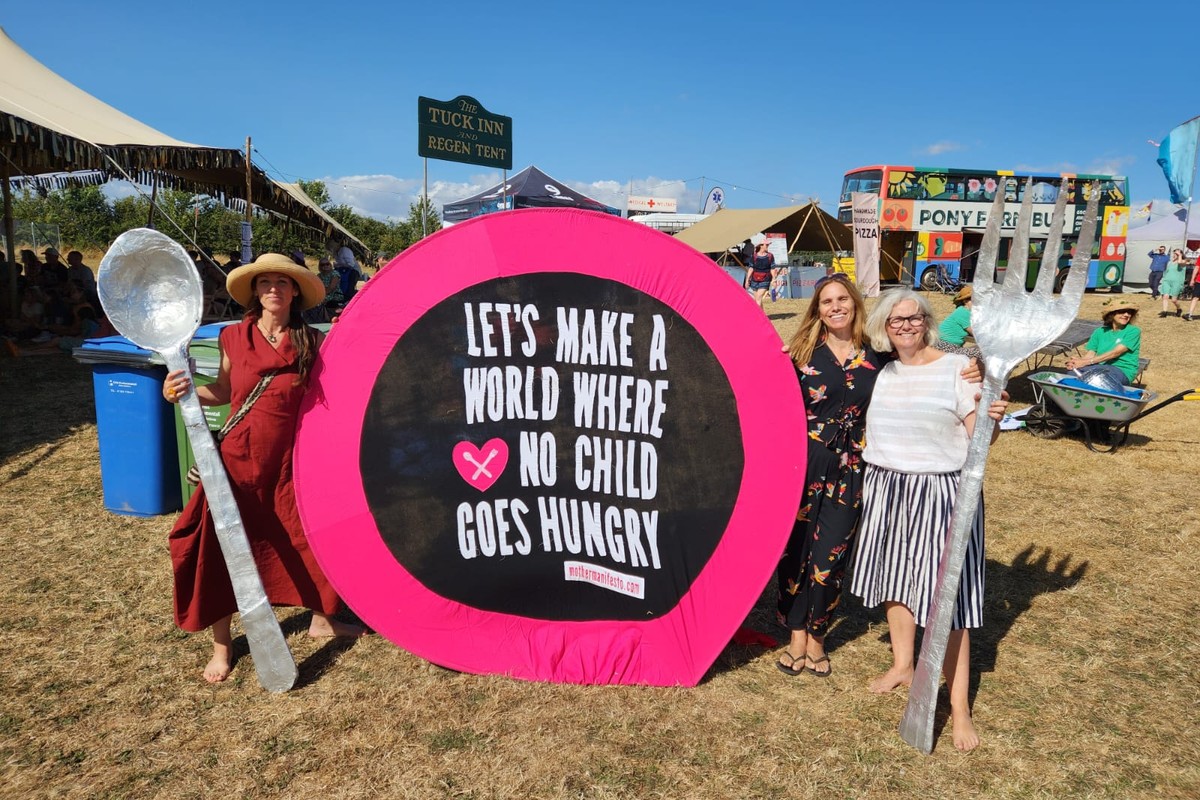
My involvement with Mother’s Manifesto has reinforced how closely climate justice and food justice are connected. The movement campaigns to end food insecurity and child hunger while highlighting the links between poverty, inequality, climate change and our food systems.
I have joined Mother’s Manifesto hunger strikes outside Parliament and was honoured to speak at the parliamentary launch of the group’s Pink Paper. What makes the campaign so powerful is its ability to connect local and global issues, reminding us that tackling hunger, climate change and inequality requires joined-up thinking and action.
Why the National Emergency Briefing Matters
One of the most impactful events I attended recently was the National Emergency Briefing in Westminster in November 2025.
More than 1,200 leaders from politics, business, science, faith groups, media and civil society came together to hear experts explain the realities of the climate and nature crisis. The briefing covered risks to food systems, public health, national security, biodiversity and economic stability.
I left feeling two things simultaneously.
Deep concern.
And renewed determination.
The science is sobering. But perhaps most striking was the honesty. The experts spoke clearly about the scale of the challenge we face and the urgent action required.
Following the event, I became a National Emergency Briefing (NEB) Connector, helping introduce the initiative to individuals, organisations and networks that I believe can help build awareness and momentum. The NEB team launched a film ‘The People’s Emergency Briefing’ which you can watch at screenings all over the UK.
I have also worked with Belmont Estate, located near Bristol, to co-host screenings of the People’s Emergency Briefing film and have begun supporting efforts to show the film more widely. Belmont Estate is a regenerative estate near Bristol focused on rewilding, restoring biodiversity, reducing climate impacts, and reconnecting people with nature through conservation, farming and education projects.
I’m particularly pleased to be working alongside my local MP, Tess Munt, to explore bringing the film into our community.
The National Emergency Briefing has a simple but powerful message.
People deserve the truth.
We were given national briefings during Covid because the emergency affected everyone. The climate and nature crisis affects everyone too. Citizens deserve clear communication about the risks we face and the solutions available to us.
Future Forwards: Reimagining What Comes Next with Rob Hopkins
Alongside understanding the risks, we must also spend time imagining the future we want.
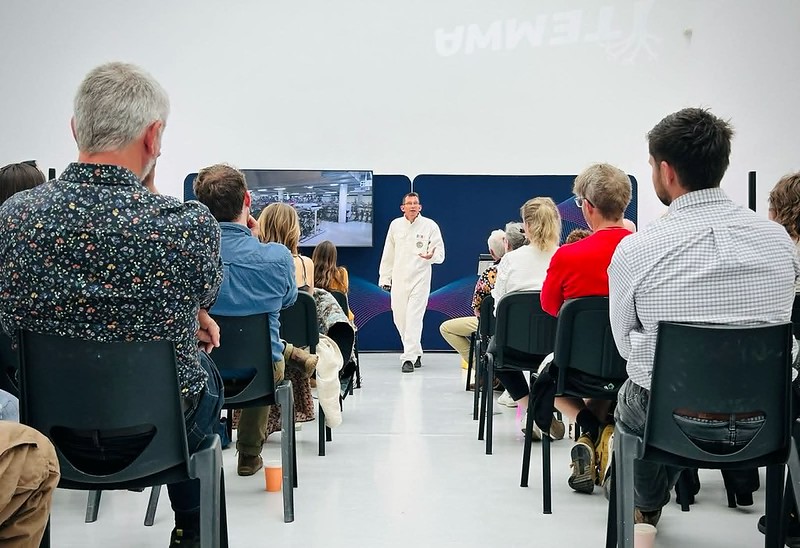
In May, Temwa hosted our Future Forwards event, kindly sponsored by Belmont Estate and Mocean (A multi award-winning creative agency specialising in sustainable corporate events, brand activation and strategic storytelling.)
The event brought together people who care deeply about creating healthier communities, restoring nature, addressing inequality and building a better future.
Too often, discussions about climate change focus exclusively on what we stand to lose.
What if we spent more time talking about what we could gain?
Cleaner air.
Healthier ecosystems.
Closer communities.
Lower energy bills.
More active lifestyles.
Greener towns and cities.
Greater connection with nature.
A more equal society.
This is where the work of Rob Hopkins continues to inspire all of us at Temwa. Through the Transition Movement, along with his books From What Is to What If, How to Fall in Love with the Future , and his writing and podcasts on imagination, he reminds us that social change begins with our ability to imagine something different.
Hope is not passive.
Hope is active.
Hope helps create the future.
One passage from How to Fall in Love with the Future particularly resonated with me:
“What if… the rapid transition away from fossil fuels, away from industrial meat production, profligate jet setting and economic inequality was the making of us? What if… right now became the most thrilling time to be alive? It is entirely possible that in the future, we will look back on this time and think, what an incredible time it was to be alive. We had the tremendous good fortune to experience it. So much change, so fast. Wouldn’t that be something?
The Next Few Years Matter
Climate scientists continue to warn that the coming years are critical.
Natural climate cycles such as El Niño can temporarily increase global temperatures and intensify climate impacts in many regions. The Met Office notes that El Niño influences global weather patterns and can amplify extreme heat events.
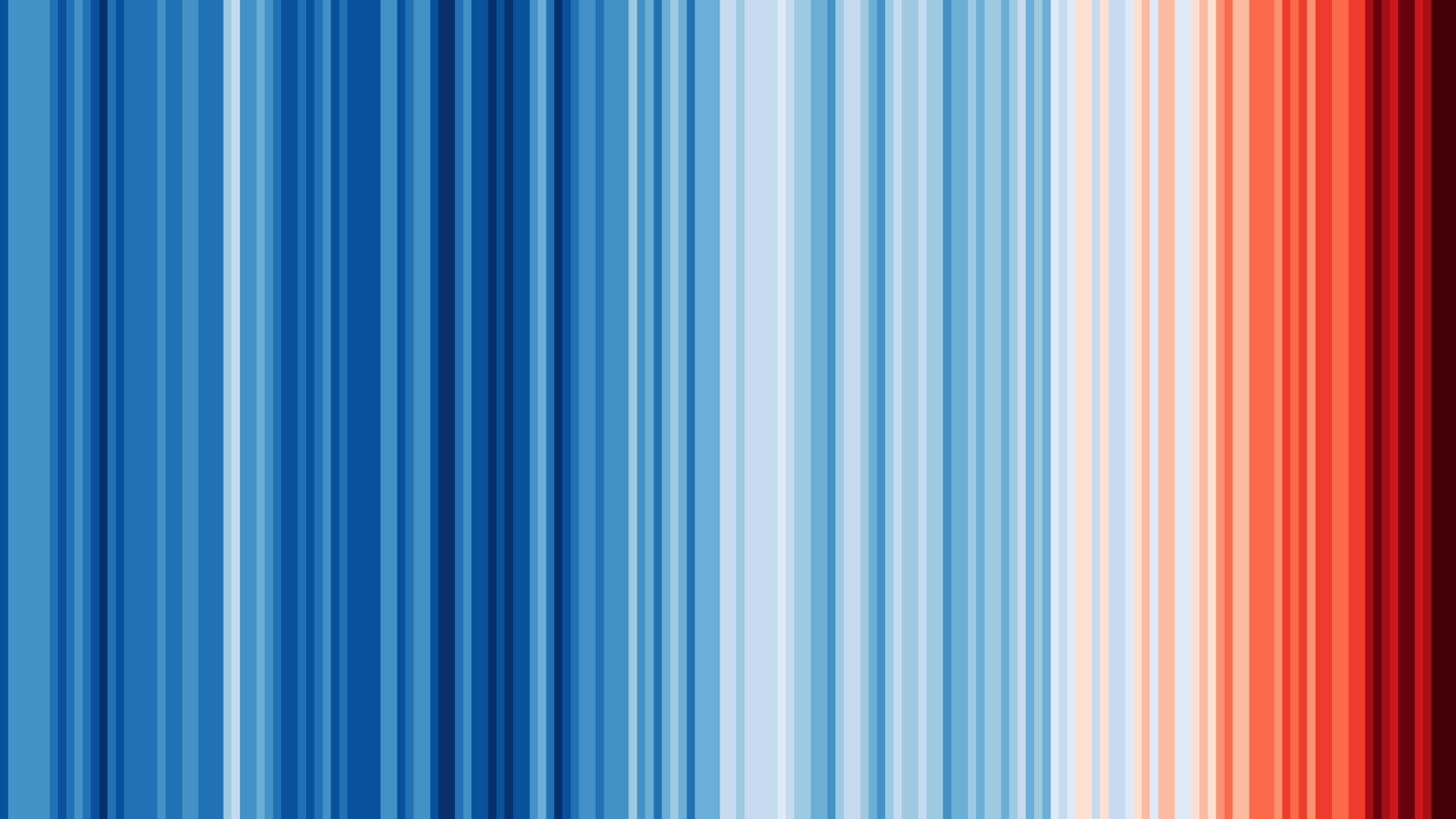
The simple yet powerful ‘Climate Stripes’ shows us the progressive heating of the planet, in one striking visual. Each stripe represents the average temperature for one single year, relative to the average temperature between the period of 1961 to 2010. Blue stripes indicate cooler than average temperatures, whereas the red stripes show the years where the temperatures were hotter than average. The Climate Stripes allow us to clearly see the rapid heating of the earth in recent decades.
The Temwa team is seriously concerned about what coming Super El Niño conditions could mean for Malawi and other countries across Southern Africa. We know from experience that prolonged droughts and disrupted rainfall can have devastating consequences for communities that rely on rain-fed agriculture.
For families already living close to the edge, another major climate shock could be catastrophic.
This is why adaptation, resilience and mitigation must happen together.
Reasons for Hope
Despite everything, I remain hopeful. Not because the situation is easy. Not because the science is reassuring. But because change is happening.
Renewable energy continues to grow rapidly around the world. Communities are restoring forests. Cities are becoming greener. Courts are holding governments and corporations to account. Young and old people around the world are demanding action. Citizens are organising. Scientists continue to speak out. And ordinary people continue to do extraordinary things.
Every day I meet people working tirelessly to create a better future.
I see it in Malawi.
I see it in our supporters.
I see it in local communities.
I see it through the Mothers Manifesto and the National Emergency Briefing movement.
I see it through Rob Hopkins’ work.
And I see it through Temwa’s work every single day.
I believe in people – when people come together, we have power
Even Temwa Patron George Monbiot says, “we must not give in to despair”.
What You Can Do
If this article resonates with you, please take action.
Watch the People’s Emergency Briefing film.
Support the National Emergency Briefing campaign and help spread the word.
Talk about climate change with friends, family and colleagues.
Contact your MP and ask for stronger climate and nature policies.
Join Mothers Manifesto or other climate justice organisations calling for positive change
Support organisations like Temwa creating climate resilience in vulnerable communities.
It’s really hard right now for international NGOs like Temwa to keep going – funding is being cut by governments globally and the cost of living crisis means that public donations are falling. At Temwa, we will not give up. Please help us continue our work with communities in northern Malawi, strengthening climate mitigation, adaptation, resilience, sustainable agriculture, forestry and environmental restoration.
As Rebecca Solnit says:
“The future is not yet written. We are writing it now.”
The climate crisis is real. The injustice is profound. The stakes could not be higher.
But hope remains.
Not wishful thinking.
Not blind optimism.
Determined hope.
The kind of hope that plants trees, restores landscapes, changes policies, builds movements and refuses to give up.
Let’s choose that path together.